






A first of its kind imaging study in Biological Psychiatry: Cognitive Neuroscience and Neuroimaging provides insights into how the brain works on psychedelic drugs and their potential use to treat psychiatric disorders
Peer-Reviewed Publication
Elsevier image:
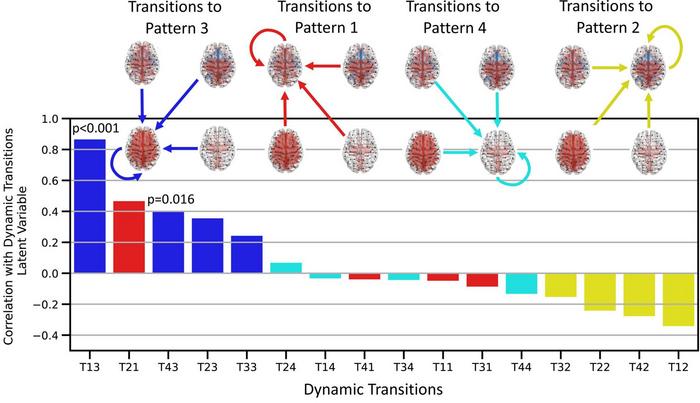
A new study finds a pattern of psilocybin-induced dynamic hyperconnectivity in the brain, which is linked to oceanic boundlessness. view more Credit: Biological Psychiatry: Cognitive Neuroscience and Neuroimaging Philadelphia, May 23, 2024 – A new study shows that the use of psilocybin, a compound found in the widely known “magic mushrooms,” initiates a pattern of hyperconnectivity in the brain linked to the ego-modifying effects and feelings of oceanic boundlessness. The findings, appearing in Biological Psychiatry: Cognitive Neuroscience and Neuroimaging , published by Elsevier, help explain the so-called mystical experiences people report during the use of psychedelics and are pertinent to the psychotherapeutic applications of psychedelic drugs to treat psychiatric disorders such as depression.
The concept of oceanic boundlessness refers to a sense of unity, blissfulness, insightfulness, and spiritual experience often associated with psychedelic sessions.
In one of the first brain imaging studies in psychedelic research, investigators found a specific association between the experiential, psychedelic state and whole-brain dynamic connectivity changes. While previous research has shown increases in static global brain connectivity under psychedelics, the current study shows that this state of hyperconnectivity is dynamic (changing over time) and its transition rate coincides with the feeling of oceanic boundlessness, a hallmark dimension of the psychedelic state.
Lead investigator Johannes G. Ramaekers, PhD, Department of Neuropsychology and Psychopharmacology, Faculty of Psychology and Neuroscience, Maastricht University, says, "Psilocybin has been one of the most studied psychedelics, possibly due to its potential contribution in treating different disorders, such as obsessive-compulsive disorder, death-related anxiety, depression, treatment-resistant depression, major depressive disorder, terminal cancer-associated anxiety, demoralization, smoking, and alcohol and tobacco addiction. What was not fully understood is what brain activity is associated with these profound experiences."
Psilocybin generates profound alterations both at the brain and the experiential level. The brain’s tendency to enter a hyperconnected-hyperarousal pattern under psilocybin represents the potential to entertain variant mental perspectives. The findings of the new […]
Psychedelic drug-induced hyperconnectivity in the brain helps clarify altered subjective experiences


