





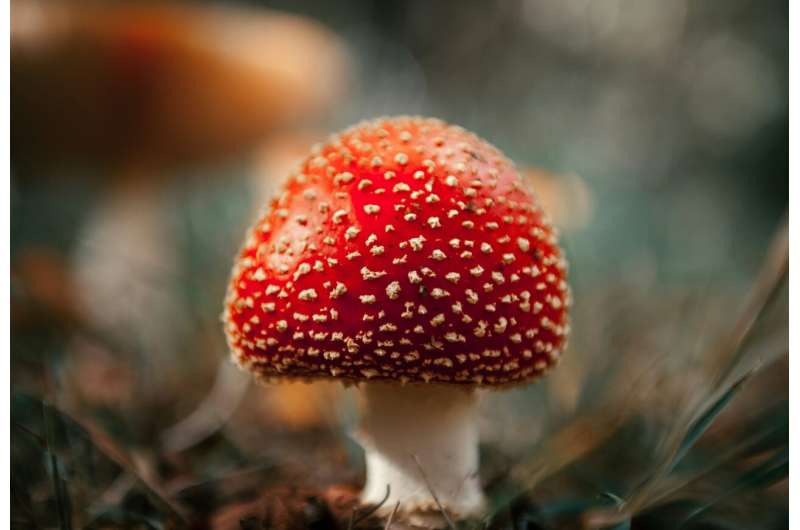
by University of California – San Diego Credit: Dylan Leagh / Unsplash Americans’ interest in a potentially harmful "magic mushroom" is soaring, with Google searches skyrocketing 114% from 2022 to 2023, according to a new study by researchers at the University of California San Diego Herbert Wertheim School of Public Health and Human Longevity Science. In a paper published in the American Journal of Preventive Medicine , the scientists suggest that the growing market for Amanita muscaria may be sparked in part by emerging clinical research supporting the safety and efficacy of psilocybin as a treatment for depression.
Like psilocybin mushrooms, Amanita muscaria mushrooms produce psychotropic effects. These include a feeling of weightlessness, visual and auditory hypersensitivity, space distortion, unawareness of time, and colored hallucinations. The psychotropic effects are produced by compounds that naturally occur in the mushroom called muscimol and ibotenic acid, its biosynthetic precursor.
However, in addition to being psychotropic, these compounds can also be more toxic than fentanyl, cocaine, and PCP, according to the scientists’ review of estimates from published mouse studies. Nevertheless, gummies and chocolates containing these compounds are being marketed with health-related claims such as mitigation of anxiety, depression, and other conditions, often by vague references to clinical studies related to psilocybin, which is not as toxic and produces different psychotropic effects.
"There is a lot of interest in the therapeutic potential for psilocybin and for good reason. But at the same time, a growing industry may be trying to capitalize on this interest by marketing other mushrooms. For example, some manufacturers are calling Amanita muscaria products ‘magic mushroom gummies’ and not disclosing what mushroom they contain, or not making it clear Amanita muscaria is a different mushroom than psilocybin and has essentially no clinical evidence supporting its use as a therapy," said Eric Leas, Ph.D., M.P.H., assistant professor in the UC San Diego Herbert Wertheim School of Public Health and Human Longevity Science and senior author on the paper.
Psilocybin and muscimol work in different ways. Psilocybin is an antidepressant that primarily binds to serotonin receptors, activating a neural pathway that mediates happiness and optimism. Amanita muscaria, […]
Unregulated sales of a toxic and hallucinogenic mushroom endanger public health, says study


